
Why Calisthenics Is One of the Best Ways to Train for Longevity

Longevity in training is not about doing less. It is about doing the right things for a long time without breaking down.
Most people stop training not because they lose motivation, but because their bodies stop tolerating what they are doing. Joints ache, tendons flare up, and injuries become recurring rather than occasional. At that point, fitness becomes something to manage rather than build.
Calisthenics avoids many of these traps, which is why it remains one of the most sustainable ways to train over decades, not just seasons.
Joint Friendly by Design
Calisthenics uses your own bodyweight as resistance. That automatically regulates load. You cannot accidentally add 20kg to a movement your joints are not ready for.
Movements are multi-joint and often self-limiting. If positioning is poor, the movement feels wrong and stops. This built-in feedback protects joints in a way machines and fixed weights often do not.
Over time, this leads to healthier shoulders, elbows, hips and knees, provided technique is respected.
Tendons Thrive on Controlled Load
Tendons adapt slowly. They require repeated, moderate loading through full ranges of motion to become resilient.
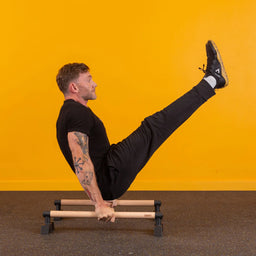
Calisthenics provides exactly that. Slow push-ups, controlled pull-ups, ring rows and isometric holds all place sustained tension through tendons without sudden spikes in force.
This is one of the reasons calisthenics athletes often maintain high levels of strength well into later life. Their connective tissue has been trained, not abused.
Strength Without Compression
Heavy axial loading places compressive forces through the spine. While this can be useful in certain contexts, over-reliance on it increases wear and tear, especially as people age.
Calisthenics develops strength without constant spinal compression. Pulling, pushing and core work are distributed across the body rather than stacked directly on the spine.
This makes it easier to train consistently without accumulating back issues.
Movement Quality Over Load
Calisthenics rewards control, range and coordination. Strength is built by improving movement quality rather than simply increasing resistance.
This emphasis on quality improves balance, joint awareness and neuromuscular coordination.
These qualities become more important with age, not less.
Falls and movement errors are a major risk factor later in life. Training that improves body control directly addresses this.
Scalable at Any Age
Calisthenics scales effortlessly.
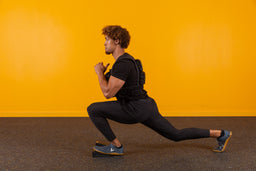
Movements can be regressed or progressed without changing the underlying pattern. Push-ups become incline push-ups. Pull-ups become rows. Squats become assisted squats.
This means training can evolve with your body rather than fighting against it. There is no need to abandon movements entirely as capacity changes.
That adaptability is critical for long-term consistency.
Muscle Mass and Longevity
Maintaining muscle mass is strongly associated with health, independence and metabolic function as we age.
Calisthenics provides sufficient stimulus to preserve and build muscle when performed with intent. Time under tension, unilateral work and isometrics all contribute to hypertrophy and strength without excessive joint stress.
Muscle built through calisthenics tends to be functional and well-coordinated, supporting everyday movement rather than isolated aesthetics.
Reduced Injury Downtime
Training interruptions are one of the biggest threats to long-term fitness. Every injury resets progress and increases the chance of stopping altogether.
Because calisthenics places a premium on control and progression, injury rates tend to be lower when training is sensible. Fewer setbacks mean more uninterrupted years of movement.
Consistency beats intensity when longevity is the goal.
How Gravity Supports Long-Term Training
Gravity Fitness equipment is designed to enhance bodyweight training without undermining its principles.
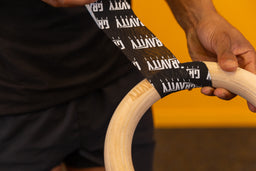
Parallettes reduce wrist strain and allow deeper, safer ranges. Rings support natural joint movement and control. Pull-up bars provide simple, repeatable loading.
These tools do not replace bodyweight training, they refine it.
The Bottom Line
Longevity is built through sustainable training, not extremes.
Calisthenics strengthens muscles, tendons and joints in a balanced way. It improves movement quality, scales with age and reduces injury risk.
If your goal is to stay strong, capable and pain-free for the long term, bodyweight training is not a compromise. It is a smart choice.