
How UK Footballers Stay Lean and Athletic (And What You Can Learn From Them)

You have probably been watching the World Cup and thinking the same thing I have been thinking: how do these lads stay in such incredible shape? We are talking elite lean body composition, explosive power, and the kind of athleticism that makes a 60 yard sprint look effortless. As someone who lives and breathes calisthenics, I find the physicality of top footballers genuinely fascinating, and I think there is a lot we can all take from the way they train.
So let me break it down for you. Here is how some of the most athletic UK footballers maintain peak physical condition, and more importantly, how their principles translate directly into the kind of bodyweight training we do every day.
The Body Composition of Elite Footballers
Take someone like Bukayo Saka or Jude Bellingham. These are guys who look lean but not bulky, strong but not rigid. That is not an accident. Modern football demands a very specific body composition: low body fat, high relative strength, and exceptional power to weight ratio. Sound familiar? That is exactly what calisthenics builds.
Elite Premier League players typically carry somewhere between 8% and 12% body fat, and they maintain that year round. Not just for the summer, not just for pre season. The reason they can do this is not some crazy crash diet. It is consistent movement, smart nutrition, and a training approach built around functional strength rather than just aesthetics.
The good news is you do not need to be a professional athlete to train like one. The principles are completely transferable.
Calisthenics and Football: More in Common Than You Think
Here is something most people do not realise. A huge amount of what elite footballers do in the gym is bodyweight based. Sprint mechanics, lateral agility work, core stability, hip mobility. These are all areas where calisthenics training absolutely shines.
Think about a player like Trent Alexander Arnold. His ability to generate explosive power from set pieces, his agility in tight spaces, his endurance over 90 minutes. None of that comes from bench pressing. It comes from a body that moves well, recovers fast, and can produce force efficiently through a full range of motion.
That is the calisthenics approach in a nutshell. And it is why I genuinely believe that bodyweight training is one of the best things a footballer could do, and one of the best things anyone inspired by World Cup athleticism can start doing right now.
How They Stay Lean: The Training Side
Let me give you the honest answer here. Elite footballers stay lean because they move a lot, they move hard, and their training is varied. During a typical week a professional player might cover 8 to 13 kilometres per match, perform dozens of high intensity sprints, and spend time in the gym doing explosive strength work alongside mobility and recovery.
The high volume of movement is key. Caloric expenditure across a training week is enormous. But the training is also compound in nature, meaning it hits multiple muscle groups at once and keeps the metabolic demand high. That is exactly why I always recommend people build their training around compound bodyweight movements rather than isolation exercises.
Pull ups, dips, push up variations, squat progressions, core work. These are the foundations. They burn more energy, build more functional muscle, and create the kind of lean athletic physique you are watching at the World Cup right now. A solid pull up bar and a set of gymnastics rings are genuinely all you need to get started.

Nutrition: What Keeps These Athletes So Lean?
This is the part people always want to know about. And honestly? The nutrition side is less complicated than the fitness industry would have you believe.
Most elite footballers follow a relatively high protein, moderate carbohydrate approach. Protein to support muscle repair and retention. Carbohydrates timed around training for energy. Minimal ultra processed food. Good sleep. Adequate hydration. That is basically it.
The reason they look the way they do is not some secret macro split. It is consistency over years, combined with a training volume most people cannot match unless they are playing professionally. The lesson for us is to focus on the basics. Eat enough protein, fuel your training, and do not overcomplicate the rest.
What you can control is your training stimulus. And that is exactly where calisthenics gives you an enormous advantage, because the barrier to getting a quality session in is incredibly low when your equipment fits in a bag or mounts to a door frame.
What Marcus Rashford and Declan Rice Teach Us About Training Consistency
Two players who really stand out to me when it comes to physical transformation and consistency are Marcus Rashford and Declan Rice.
Rashford at his best is an athlete who moves with genuine freedom and power. His acceleration over short distances is phenomenal. And if you look at how he has developed physically over his career, it is a masterclass in adding functional strength without adding unnecessary mass.
Declan Rice is a different archetype but equally impressive. He is built for physical contact, for covering ground, for winning headers and immediately transitioning into close control situations. That requires genuine all round athleticism, not just one dimensional strength.
Both players demonstrate what happens when you commit to long term consistency rather than chasing quick results. That is a principle I talk about constantly with people who are starting their calisthenics journey. The transformations that last are built slowly, session by session, over months and years.
How to Train Like an Athletic Footballer Using Calisthenics
Right, so how do you actually apply this? Here is how I would structure a week of training inspired by the athletic demands of elite football, using bodyweight training as the foundation.
Start with your upper body pushing and pulling. Think push up progressions and pull up work. If you are training at home, a free standing pull up bar is a game changer because it means you can train anywhere without fixing anything to a wall.
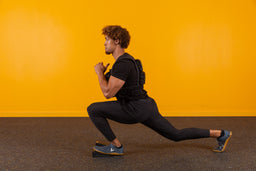
Add in lower body explosive work. Box jumps, squat jumps, Bulgarian split squats. Football is a sport built on lower body power, and calisthenics has some brilliant tools for developing exactly that.
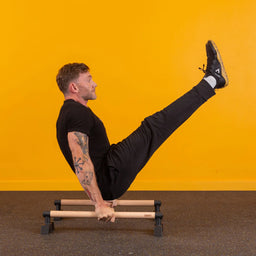
Core work is non negotiable. A strong, stable core is what allows footballers to change direction at pace, hold their shape under pressure, and generate power in awkward body positions. Hanging knee raises and L sit progressions on gymnastics rings are among the best core exercises you can do.
Finish with mobility and flexibility. Footballers spend a significant amount of time on this, and it is the thing most recreational trainers neglect. Spend ten minutes at the end of every session working through hip openers and thoracic mobility. Your body will thank you.
The Equipment That Makes It All Possible
One of the things I love most about calisthenics is how accessible it is. You do not need a full commercial gym setup to train at the level we are talking about here.
For most people, the ideal home calisthenics setup comes down to a few key pieces. A pull up bar for your pulling work. Gymnastics rings for pushing, pulling, and core stability. Parallettes for dip and L sit progressions. And a bit of floor space for your lower body and mobility work.
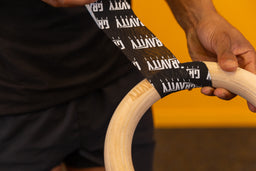
Our gymnastics rings are probably the single most versatile piece of kit you can own. You can do ring rows for beginners all the way through to muscle ups for advanced athletes, and everything in between. They travel well too, which means your training does not stop when life gets in the way.
If you are just getting started and want to invest in something that will genuinely transform your training, take a look at our calisthenics equipment and find the setup that suits where you are right now.
The Mindset Behind the Physique
I want to finish on something that does not get talked about enough. The physiques you are watching at the World Cup are the result of a particular mindset as much as a particular programme.
These athletes are genuinely obsessed with getting better. Not just looking better. Performing better. Moving better. Recovering better. When you train with that mentality, the physical results follow naturally.
Calisthenics, at its heart, is the same. It is a pursuit of movement quality. Of skill. Of genuine physical capability. The leanness and the strength are almost a side effect of becoming a better mover.
So if the World Cup has sparked something in you, if watching those athletes has made you want to push your own training to a new level, then brilliant. Channel that. Use it. Grab a pull up bar, get your rings up, and let us see what you can do.
The best time to start was years ago. The second best time is right now.