
How to Build the Perfect Calisthenics Home Gym

One of the things that originally drew me to calisthenics is how it can get you seriously strong without needing to go to a gym. When I started out, that was useful because I was so busy building the business. These days, it’s great because I have a young family.
Some of the strongest athletes I know train mostly at home. The challenge of a home gym is knowing what equipment you actually need. I've seen people get strong with just a pull-up bar and set of parallettes, and I’ve also seen people spend hundreds on kit they barely use.
If you're thinking about building a calisthenics home gym, here's how I'd approach it.
How to build the best home calisthenics setup
Forget about individual products for now, and start by thinking about movements. Any calisthenics setup should let you train the main movement patterns:
-
Pull
-
Push
-
Core
-
Legs
-
Mobility
If your setup covers those five areas, you can’t go far wrong. How you achieve it (i.e. which specific pieces of equipment you get) comes down to goals, preference, and the space you have available at home.
That's why I always recommend starting with the exercises you want to do, then choosing equipment that supports them.

What boxes does a home calisthenics gym need to tick?
The biggest mistake people make with a home gym setup is focusing on one movement (usually pull-ups for calisthenics people) and forgetting other movements. Pull-ups are great, but a home gym that only allows you to train pull-ups isn’t a gym. Here's what I think every good home calisthenics gym should allow you to do:
Pull – the foundation of upper body strength
Pull-ups, chin-ups, rows, dead hangs, and hanging core work.
Push – horizontal push and vertical press
Push-ups, dips, handstand work, planche progressions, and pressing exercises.
Core – the under-rated hero of calisthenics
Hanging leg raises, L-sits, hollow body holds, planks, and rotational exercises
Legs – yes, calisthenics can train leg strength
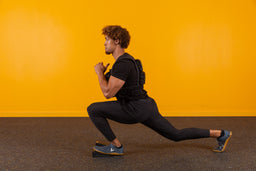
Squats, lunges, split squats, step-ups, and plyometric work.
Mobility – unlocks calisthenics skills
Often has a bigger impact than buying another piece of equipment.
What calisthenics equipment should you get?
OK, let’s get into the nitty-gritty of shopping for your home gym set-up. If I was building a cali home gym from scratch, I'd prioritise equipment in this order.
1. A pull-up bar
If you can only buy one thing, buy a pull-up bar (wall-mounted, free standing, or doorway if that’s what it takes).
A pull-up bar opens up:
-
Pull-ups
-
Chin-ups
-
Rows
-
Hanging knee raises
-
Hanging leg raises
-
Grip training
A doorway pull-up bar is ideal if you're renting or short on space. If you have a dedicated training space, a wall-mounted pull-up bar or portable pull-up rack gives you even more options.
2. Parallettes
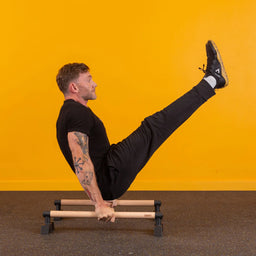
Parallettes are probably the most versatile piece of calisthenics equipment I own. They’re also kinder on the wrists than training on the floor. You can use them for:
-
Push-ups
-
Dips
-
L-sits
-
Handstands
-
Planche work
-
Core training
3. Gymnastics rings
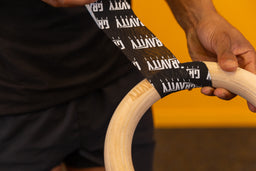
If someone told me I could only keep one piece of equipment for the rest of my life, wooden gymnastics rings would be high on the list. They're portable, affordable, and incredibly versatile. You can train pulling, pushing, core work, stability, and mobility all from one set of rings.
4. Resistance bands
Resistance bands make almost every aspect of calisthenics easier to progress. They're also one of the cheapest additions you can make to your gym. They help with:
-
Assisted pull-ups
-
Mobility work
-
Warm-ups
-
Rehab
-
Added resistance
Different home gym setups for different situations
Not everyone has a garage or shed to convert into a home gym. The best setup is the one that works for your life.
If you rent
Keep things portable, with equipment that can be packed away and moved when needed. I'd focus on:
-
Door pull-up bar
-
Parallettes
-
Rings
-
Resistance bands
If you own your home
You have more options. A wall-mounted pull-up bar or portable pull up rack can become the centrepiece of a home setup, especially combined with rings and parallettes.
If you live in a flat
Choose equipment that stores easily and doesn't take over your living room. Rings, bands, a door bar, and a pair of small or medium parallettes can give you a complete workout without needing much space.
If you have a garden
You're sitting on a huge opportunity if you’ve got outdoor space. A portable pull-up rack lets you train outdoors whenever the weather behaves itself.
If you don't have outdoor space
Focus on versatility. A compact setup with rings, bands, parallettes, and a pull-up bar can still cover almost every movement pattern.
If you live alone
Think about what motivates you. Some people love having a dedicated training corner that stays set up permanently and others prefer equipment they can move around.
If you have a family
Storage becomes important. Choose equipment that packs away and doesn't create trip hazards in the middle of the lounge. The good news is that most calisthenics equipment takes up very little space compared to traditional gym equipment.
The best home gym is the one you use
It's easy to waste time chasing the perfect setup. The reality is that consistent training beats another bit of equipment every time. I've seen people build incredible strength with a doorway pull-up bar and a set of parallettes, and I've seen expensive home gyms become fancy clothes horses.
Start simple, with equipment that covers push, pull, core, legs, and mobility work, then add equipment as your training evolves – but only if you want to.
If you've already built a setup you're proud of, tag us on Instagram @gravity.fitness and show us what you're working with. We love seeing how the Gravity community trains.