
How to Mix Calisthenics and Weight Training to Get Strong and Lean


For years, people have treated calisthenics and weight training as separate things – you’re either into bodyweight training or free weights. But some of the strongest and most athletic people I know do a hybrid mix of bodybuilding-style training and calisthenics.
Hybrid training means you get the best of both worlds and don’t have to choose a side. It's about using the right tool at the right time - calisthenics for functional strength, body control, and athletic movement. Weight training to overload specific muscles, build size, and get stronger when bodyweight isn't enough.
Combining calisthenics with weight training can be the fastest way to build a lean, muscular, capable physique. Let’s look at how to do it, including training splits and exercise combinations.
What is hybrid strength training?
When most people hear "hybrid training", they think of strength training with endurance events like running or Hyrox.
We’re talking about strength hybrid training - combining calisthenics with more traditional free weights weight training.
How does it work? And how can you design a training program that includes calisthenics and weights?
The best way to do it is use calisthenics as the foundation of the movement, and weights to build top-end strength, muscle, or to address weaknesses.
I also think it’s massively important to enjoy your training – so if you really love a heavy leg press session or dumbbell strict press, keep them in your programming!

Why combine calisthenics and weights?
Why would you do both calisthenics and traditional weights? Both training styles have their strengths (excuse the pun).
Calisthenics teaches you to move your own body through space. It develops coordination, balance, grip strength, joint stability, and body awareness in a way machines and even free weights can't.
Weight training makes it easier to apply progressive overload. You can add 2.5kg to a movement, you can isolate muscles, and you can build strength through ranges of motion that are difficult to load with bodyweight.
Which is better calisthenics or weights?
I really hate that question – instead of asking which is better, ask what each one can bring to your training. A pull-up and a lat pull-down aren’t competing exercises. They develop slightly different qualities, and there's room for both.
Is hybrid training good for building muscle?
Yes, hybrid strength training is one of the best ways to build muscle – whether that’s for strength or for aesthetics.
Compound bodyweight movements like pull-ups, dips, push-ups, and rows already build muscle. As they get easier, you can progress to harder variations or add external weight.
In this way, traditional weight training can fill the gaps and build strength that calisthenics can’t. If your shoulders are lagging, overhead pressing can help. If you want to build stronger hamstrings, Romanian deadlifts are more effective than most bodyweight exercises.
Doing calisthenics plus weight training usually leads to a balanced physique that’s still functional – in other words, you’ll look great and be athletic!
Will lifting weights make you worse at calisthenics?
This is a common question and a legitimate concern, especially for people who lose mobility easily. But the short answer is no, building muscle through weight training won’t stop you from doing calisthenics movements.
In fact, stronger muscles usually make those skills easier – as long as you keep up your mobility work and skills practice.
The only time extra muscle can become a disadvantage is if you gain bodyweight faster than you gain relative strength. This is pretty hard to do though, unless you’re a mesomorph outlier!
The best exercises from both training styles
Some people worry that doing a hybrid approach of calisthenics and weights means you’ll have to do double the exercises. That’s not the idea at all.
I recommend building your programme around movements that give you the biggest bang for your buck.
Calisthenics staples
-
Pull-ups
-
Dips
-
Push-ups
-
Rows
-
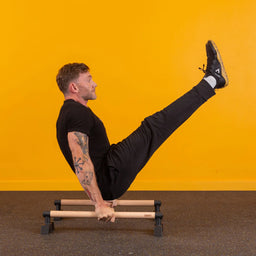
L-sits
-
Hanging leg raises
-
Handstand work
Weight training staples
-
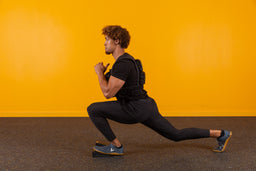
Barbell squats
-
Romanian deadlifts
-
Overhead press
-
Barbell rows
-
Bench press (if it suits your goals)
-
Farmer's carries
Notice there's very little isolation work here. Spend most of your time getting stronger at compound movements that train multiple muscle groups. Add smaller accessory exercises only if they solve a specific problem.
How to combine calisthenics and weight training
Most people should do their calisthenics work first while they’re fresh and finish with weight training to build additional strength where it’s needed.
If your main goal is increasing your squat or deadlift, do things the other way round.
The movements that matter most should always get your best energy. The two styles should complement each other, not compete for your attention or energy.
A simple hybrid training split
For most people, 3-4 sessions a week is plenty.
A weekly split could look like this:
Day 1 – pull focus: pull-ups, rows, front lever progression, barbell rows, biceps
Day 2 – leg focus - squats, Romanian deadlifts, core work
Day 3 – push focus - dips, push-ups, handstand practice, overhead press, triceps
Day 4 – cali skills practice, conditioning, any weaker areas you want to improve
Don't overcomplicate it. Hybrid training just means choosing the right exercises for your goal. If a movement helps you build strength, improve your skills, or stay healthy enough to keep training, it deserves a place.
At Gravity, we're calisthenics-first. We think learning to control your bodyweight should be the foundation of training. But that doesn't mean ignoring the weights.
The best programme will keep you strong, healthy, making progress - and enjoying what you do. Try a combination of calisthenics and weights and see how you get on.