
Is Plyometrics and Balance Work Key to Better Calisthenics?

When you think about calisthenics training, you think about the drills and skills themselves - pull-ups, dips, push-ups, and maybe advanced skills like handstands.
Strength and skill work dominate most calisthenics programming.
But what about the overlooked elements of calisthenics – plyometrics and balance?
These are common in sports like athletics and gymnastics, but a lot of calisthenics athletes rarely include them. Adding balance and power work could unlock faster progress toward more advanced calisthenics movements. Let’s look at exactly how to start adding them in.
Why are balance work and plyometrics underused in calisthenics?
A lot of people associate plyometrics with sports like sprinting and balance work with injury rehab. But both plyometrics and balance work are relevant to calisthenics.
Movements like hand balances, pistol squats, and even strict pull-ups take a lot of balance and force production, so training these qualities directly can make calisthenics exercises feel easier.
Most calisthenics training focuses on relative strength and skill progressions, doing movements slowly and with control. Whilst that’s essential, it means athletes spend less time on dynamic movements, explosive strength, and stability in end ranges.
The benefits of balance work for calisthenics
Balance training improves your ability to control your body in space. That might sound simple, but it has a big impact on how efficiently you move. In calisthenics, better balance means better body awareness, co-ordination between limbs, efficient skill learning, and joint stability.
For example, learning a pistol squat isn’t just about leg strength. It also requires hip and pelvis control, ankle stability, and the ability to stay balanced.
Balance training also strengthens stabiliser muscles that help protect joints like the ankles, knees, shoulders, and wrists. This can have a big impact on can injury risk and movement quality.
The benefits of plyometrics for calisthenics
Plyometric training focuses on explosive power - the ability to produce force quickly.
It also develops the stretch-shortening cycle, which allows muscles and tendons to store and release energy efficiently.
The benefits of all this includes:
-
Increased power and athleticism
-
Faster recruitment of muscle fibres
-
Better performance in explosive skills
Even if your main goal is strict calisthenics movements, explosive training can help you develop the strength and speed you’ll need for more advanced movements.
Can balance and plyometrics build strength, size, or speed?
Plyo and balance work will never replace traditional strength work, but they complement it really well.
Balance work improves neuromuscular co-ordination so you recruit muscles more efficiently. Plyometrics develop power and speed, and recruit high-threshold muscle fibres, which can help with muscle development.
When you combined balance work and plyometrics with regular calisthenics training, you become a more well-rounded athlete, with better movement efficiency, stronger muscles (including stabiliser muscles), and better transfer to those advanced cali skills.
How to add balance work and plyometrics to calisthenics training
You don’t need to completely redesign your programme to include a bit of plyo and balance work. The easiest way to add them is at the beginning of a session, when you’re fresh.
For example:
-
Warm-up and mobility work
-
Balance drills
-
Plyometric exercises
-
Main calisthenics strength training
-
Skills practice or accessory work
Plyometrics should be low-to-moderate volume with full recovery between sets, focusing on quality and never pushing to failure. Balance exercises can also work well as part of a warm-up or as light recovery work

Best balance exercises for calisthenics
Balance exercises should challenge your stability but be controlled.
Try these:
Single-leg balance drills - stand on one leg, reaching or rotating the torso for ankle and hip stability.
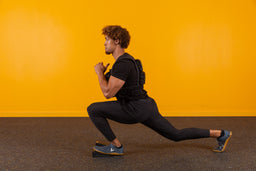
Pistol squat progressions - single-leg squats need strength and balance, making them excellent for lower-body control.
Handstand balance drills - wall-assisted handstands, shoulder taps, and freestanding practice for upper-body balance and coordination.
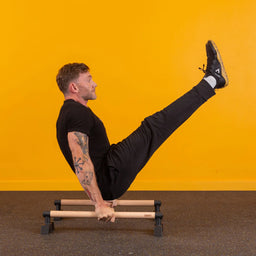
L-sit holds - holding an L-sit on parallettes or dip bars for core stability and balance.
Best plyometric exercises for calisthenics
Plyometric training should focus on controlled explosiveness and be low rep rather than pushing to fatigue.
Try these:
Box jumps - lower-body power and coordination. Increase box height as you improve.
Jump squats - build explosive strength in the legs.
Explosive pull-ups - pull as quickly as possible, aiming your chest toward the bar.
Clap push-ups - classic plyometric movement that builds upper-body power.
Bounding or skipping drills - improve co-ordination and lower-body elasticity.
Who should do balance and power work with calisthenics?
Beginners and intermediate athletes are still developing movement coordination and athletic foundations, so they stand to gain a lot from adding a bit of power and balance work. Advanced athletes often incorporate this type of work as their training evolves, but they definitely shouldn’t take their eye off the ball.
How to start adding them to your training
If you’ve never used balance work or plyometrics before, start simple by adding one or two exercises per session, like:
-
Single-leg balance holds
-
Box jumps
-
Explosive push-ups
-
Handstand balance practice
Do them early in your session for 2–4 sets of low reps or short holds. Over time, you’ll notice improvements, and when you do your normal calisthenics work it might feel stronger and more controlled.
Balance and plyometrics might not be the most talked about parts of calisthenics training, but they can make a huge difference by improving stability, co-ordination, and power. Let us know if you need any more training ideas!