
Athlete Spotlight: Martin Tran

We caught up with athlete and calisthenics coach Martin Tran to talk about balancing training, nutrition and body freedom through calisthenics. You can find the full interview here on our YouTube channel.
Hi Martin, thanks for speaking to us! Can you introduce yourself to Gravity Fitness readers?
MARTIN TRAN:
I’m 23 years old, a coach and athlete, and I specialise in calisthenics but also a hybrid approach with a bit of weightlifting.
GF:
How did you get into calisthenics?
MT:
I was always this skinny scrawny kid, doing every sport and after-school club you can think of. When lockdown hit, I couldn’t do any sports. I had nothing. So I started doing push ups, pull ups and sit ups (I didn’t realise it was calisthenics at the time).
When things opened up after lockdown, I got into the gym and started weightlifting to get stronger and build some mass. By the start of 2024 I had bulked up a bit and had that foundational strength, so I refocused on calisthenics and fully committed to it.
I really enjoy being able to move my body freely rather than just lifting weights. Since then I’ve been making progress, unlocking different skills, and getting involved in the calisthenics community, even creating my own community.
GF:
What's a typical training week for you?
MT:
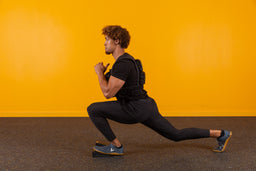
In a normal week I’ll do two leg sessions including weighted barbell stuff, pistol squats, and some machine work for hamstrings and calves, and two upper body sessions (one pull and one push). I keep the weekends for rest unless there’s an event on.
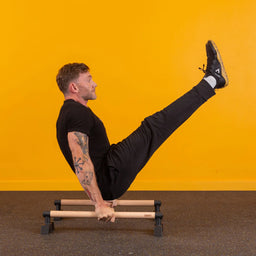
Last year, before my injury, I did one leg session, one pull, one push, and one statics session where I’d work on front levers, back levers, planche, and handstands.
GF:
Take us through a day in the life of Martin.
MT:
I work a full-time job Monday to Friday, so in the mornings I have my breakfast and supplements including vitamin D and a protein shake.
Straight after work I go to the gym, and I’m home around 7pm where I have a big dinner. Dinner is where I try to get as much of my daily macros and calories as possible, because my work is very active and physically demanding.
In the evening I might edit content, do check ins with coaching clients, or just chill. I try to be in bed by 11pm. I stretch at the gym and do some extra mobility at home, and I meal prep to make things easier (typical things like chicken or pork and rice).
GF:
How do you balance strength, skills, and recovery in training?
MT:
I’ve had a few injuries (shoulder, lower back, wrist, elbow), so these days I focus on proper warm ups, stretching, and recovery. I’ve had to learn about strength and conditioning for joints.
When I train skills, I prioritise progression. My workouts are really intense and put a lot of strain on my CNS, so rest and recovery has helped me balance everything.
I separate skills and strength throughout the week, doing skills on my statics day (front lever, back lever, planche progressions, handstands work). My pull and push days are more about endurance and strength days, doing lots of sets and reps on the bar, parallettes, and on the floor.
I do mobility in the gym and in the evenings as well. The weekends are for life enjoyment, spending time with family and friends. I go somewhere nice to get outside and maybe film content with other creators.
GF:
What's the biggest mistake you've made in your journey?
MT:
My biggest mistake was my most recent injury where I fell off the bar and injured my back. Lessons I took from that were learning about mobility and conditioning for the joints. Without that it’s difficult to progress in calisthenics and can be dangerous.
GF:
What are your 3 non-negotiable habits?
MT:
1) Eating enough protein, carbs, and fats to fuel training and high performance.
Nutrition is vital for calisthenics and life in general.
2) Being active.
It’s good for my physical and mental health. When I’m not active I feel sluggish, so I’ll always do something that keeps my body in the flow and not stagnant whether that’s a walk, run, or just push ups.
3) Having a good balance of work, life, and fitness.
I’ve travelled a lot and it opened my eyes about true balance, having time to relax and contemplate what you’ve achieved and what you can do in life. Calisthenics is amazing because you can do it anywhere in the world.
GF:
What are your 3 top tips to anyone getting started in calisthenics?
MT:
1) Focus on the basics.
Everyone sees athletes doing crazy skill moves, but everyone started with the basics. Calisthenics is so progression based and it takes time to build muscle memory. Make sure you can perform push ups, pull ups, and sit ups with good form and high reps (8 to 10 clean pull ups, 10+ clean push ups, and core for that endurance).
2) Have good mobility.
Don’t neglect stretching, mobility, and joint conditioning.
3) Take recovery seriously.
Stretching, flexibility, sleep, hydration, and diet all matter.
GF:
What do you think are the most under-rated and over-rated calisthenics exercises?
MT:
Over-rated: elbow lever.
People think it’s the best skill and the hardest one to achieve, but it’s not all that. It is a good skill but others are more important.
Under-rated: pseudo push ups.
These are the perfect exercise for almost all high-level skills like planche and handstand push ups. They really build shoulder strength compared to any other move I can think of and teach you how to protract your shoulders really well.
GF:
What's the biggest myth in calisthenics?
MT:
People who think that when they reach a high-level skill they’ll have it forever. I wish. It’s brutal. If you don’t train it, you might have it for a week and then the next week you won’t be able to hold it for three seconds. If you don’t train it, you can lose it.
GF:
What's your calisthenics goal for 2026?
MT:
I want to compete at a high level in 2026 and am building towards this.
As a coach, I’m really focused on building my own community through TRNXCali. For my business, I just want to grow my online coaching for people looking for life balance with calisthenics and nutrition.
The motto of my business is “body freedom and body mastery.”
Freedom can mean moving your body freely and can also be about body freedom in the world. Travelling, exploring, trying new things, and still being able to do movements anywhere.
Having the strength to master your own bodyweight is the best thing a human can do.
Follow Martin and TRNXCali to see more of his training and coaching
Instagram - https://www.instagram.com/tranthenics
Facebook - TranThenics
YouTube - https://youtube.com/@tranthenics