
How Many Calories Are You Actually Burning in a Calisthenics Session?


You have just smashed out a set of pull ups, your shirt is stuck to your back, and you want to know if all that effort actually counted for something on the calorie side of things. So let us settle it properly, coach to training partner, no fluff.
The honest answer, it depends on you
Here is the bit most articles skip over. There is no single number that applies to everyone, because how many calories you burn in a calisthenics workout depends on your body weight, how hard you are pushing, how long you train for, and how much rest you take between sets. Two people doing the exact same circuit can burn very different amounts, and that is completely normal.
What we can do is use something called a MET value, which stands for metabolic equivalent of task. It is a simple way of comparing how much energy an activity costs compared with sitting still. General calisthenics sits at around 3.8 METs for a moderate pace, while a proper high intensity session with pull ups, dips, and explosive movements can push past 8 METs. The formula looks like this, calories per minute equals MET multiplied by your body weight in kilograms multiplied by 3.5, then divided by 200.
You do not need to memorise that. Just know that the harder you work and the more you weigh, the more energy you are spending, and that calisthenics gives you a genuinely wide range depending on intensity.

So what does that look like in real numbers
Based on that formula and the data behind it, here is roughly what you can expect.
A relaxed session built around slower bodyweight moves like sit ups, controlled squats, and light mobility work tends to burn somewhere between 250 and 400 calories an hour for most people.
A proper calisthenics session, the kind with pull ups, dips, push up variations, and minimal rest between sets, typically burns between 500 and 700 calories an hour.
A shorter 30 minute session still adds up nicely. At a moderate pace you are looking at around 150 to 170 calories, and if you go all in on a high intensity circuit you can burn 250 to 350 calories in that same half hour.
For context, that puts a hard calisthenics session ahead of a lot of traditional weightlifting sessions, which usually sit between 200 and 400 calories an hour. The reason comes down to how calisthenics trains your body. You are almost always working several muscle groups at once, whether that is a muscle up, a handstand hold, or a set of dips, and a lot of sessions naturally keep your heart rate up throughout, so you get a strength workout and a cardio benefit rolled into one.
Why the burn does not stop when you leave the gym
This is my favourite part to explain, because it is the bit that surprises people the most. Intense training does not just burn calories while you are doing it. Your body keeps working overtime afterwards to repair muscle, restore oxygen levels, and bring everything back to baseline. This is often called the afterburn effect, and it is one more reason a tough calisthenics session earns its place in your week even after you have showered and gone home.
It also explains why two sessions that look similar on paper can leave you feeling very differently the next day. The one with less rest and more compound movement, think supersetting pull ups with dips rather than pacing them out, tends to demand more recovery, which is exactly what drives that extra calorie use.

How to burn more without changing your whole routine
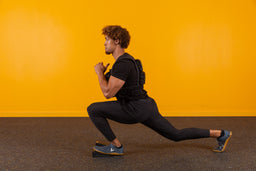
You do not need to overhaul your programme to shift these numbers in your favour. A few small changes make a real difference. Cut your rest periods down between sets rather than chatting between them, and your MET value climbs because your heart rate stays elevated for longer. Add load once bodyweight alone stops challenging you, a weighted vest is one of the simplest ways to do this without needing extra space or a spotter.
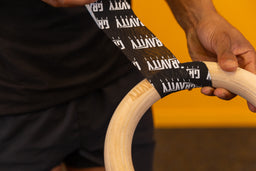
Building your session around a pull up bar or a set of gymnastic rings also opens the door to bigger compound movements like muscle ups and rows, which recruit more muscle at once and push your calorie burn higher than isolated moves ever will. If you train at home and space or wall drilling is the issue, that is exactly the kind of question I get asked about best home pull up bars if you cannot drill into the walls, and a freestanding or doorway option solves it without any compromise on your training.
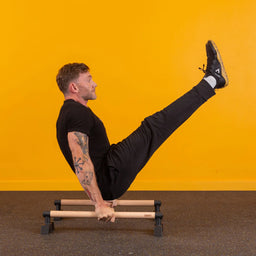
Working on holds and static strength, think L sits or planche progressions on a set of parallettes, raises the intensity of your session in a different way, through time under tension rather than reps, and it all adds to the same total. And if you want to keep your upper body working even on a rest day, looping in a resistance band for assisted pull ups or added resistance on push ups is a brilliant way to keep the engine running without loading your joints too hard.
My honest take
Calorie burn is a useful number, and it is genuinely satisfying to watch it climb as your training gets harder. But I would not want you chasing it as the only measure of a good session. The real win with calisthenics is what it does for your strength, your control over your own body, and your confidence when you finally nail that first strict pull up or hold a handstand for a few extra seconds. The calories are a brilliant bonus that comes along for the ride.
So next time you finish a session and you are stood there catching your breath, know that you have earned every one of those calories, and quite a few more in the hours after too. Keep showing up, keep adding a little more intensity when you are ready, and the numbers will always look after themselves.