
The Best Calisthenics Exercises for Building a Bigger Back


A big, strong back is one of the clearest signs of real strength, and you do not need a lat pulldown machine to build one. Calisthenics back exercises use your own body weight as resistance, and when you program them well, they build width, thickness and pulling strength that carries over into everything else you do.
If you have ever wondered how to build a bigger back with bodyweight training alone, this is exactly the guide you need. Grab a bar, get some floor space, and let us get into it.
Why Calisthenics Builds a Serious Back
Your back is made up of several muscles working together, including the lats, traps, rhomboids and rear delts. Most calisthenics back exercises are pulling movements, and pulling your own bodyweight through a full range of motion does two things at once. It builds strength, and it builds size, because you are recruiting a huge amount of muscle every single rep.
The other advantage is control. When you pull yourself up to a bar, you cannot cheat the movement the way you might with a machine. Your whole back has to work together, which means better muscle development and fewer weak links.
Pull Ups, Your Number One Back Builder
If you only ever do one calisthenics back exercise, make it the pull up. A wide, overhand grip targets your lats hard and builds the width that gives you that classic V taper. Bring your grip in slightly and you shift more of the work onto your mid back and rear delts, which adds thickness.
Aim for controlled reps rather than rushed ones. Pull your chest towards the bar, pause for a moment at the top, then lower yourself slowly. That slow lowering phase, known as the eccentric, is where a lot of the muscle building magic happens.
You will get the most out of this movement with a solid, stable bar. A wobbly doorframe bar will hold you back more than you think, which is exactly why a proper pull up rack makes such a difference to your training.
Check out our full range of pull up bars and racks to find a setup that suits your space and your goals.

Chin Ups for Thickness and Grip
Chin ups use an underhand grip, which brings your biceps into the movement alongside your lats and mid back. Many people find chin ups slightly easier than pull ups when they are starting out, which makes them a great confidence builder while you work towards a full set of pull ups.
Do not think of chin ups as the easier option though. Load them up with extra reps or slow tempo work, and they will absolutely add thickness to your back over time.
Inverted Rows for Beginners and Volume Work
If a full pull up is still a work in progress, inverted rows are your best friend. Set a bar at around waist height, walk your feet out until your body is at an angle, then pull your chest up to the bar. The more horizontal your body, the harder the row becomes, so you can adjust the difficulty as you get stronger.
Inverted rows are also brilliant for experienced athletes because you can rack up higher rep sets to build muscular endurance and extra back volume without hammering your grip the way pull ups do.
A portable pull up rack with adjustable bar heights makes this exercise easy to set up anywhere, whether you train at home, in the garden or at the gym.
The Gravity Fitness Portable Pull Up Rack gives you multiple bar heights, so you can go from beginner rows to advanced pull up work on the same piece of kit.

Archer Pull Ups for Advanced Width
Once standard pull ups feel too easy, archer pull ups are a fantastic next step. You pull yourself up towards one hand while the other arm stays mostly straight out to the side, shifting almost all the load onto one side of your back at a time.
This is a serious strength builder and a great stepping stone towards one arm pull up work, if that is a goal on your list. Start with a handful of reps per side and build from there.
Ring Rows and Ring Pull Ups for Extra Instability
Gymnastic rings add a whole new challenge to any pulling exercise because they move. That instability forces your stabiliser muscles, especially around your shoulders and upper back, to work overtime just to keep you steady.
Ring rows are a great regression if pull ups feel too advanced right now, and ring pull ups are a brutal progression once you have pull ups dialled in. Either way, your back and your grip will thank you for the extra work.
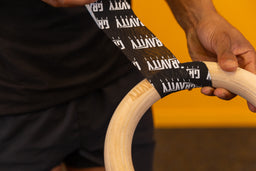
Our gymnastic rings setup in minutes on any pull up bar or rack, so you can start adding ring work to your back sessions straight away.
Scapular Pulls and Dead Hangs, the Foundation Everyone Skips
Before you chase harder variations, spend time on the basics. A dead hang simply means hanging from a bar with straight arms, and it does wonders for grip strength, shoulder health and general back conditioning.
A scapular pull takes this further. From a dead hang, pull your shoulder blades down and together without bending your elbows, then release. This small movement teaches you to control your shoulder blades properly, which improves almost every other pulling exercise on this list.
These are not glamorous exercises, but skip them and you are leaving strength and stability on the table.
Resistance Bands for Assistance and Detail Work
Resistance bands are one of the most underrated tools in calisthenics back training. Loop a band over your bar and place a knee or foot in it, and you get assistance on pull ups and chin ups while you build towards doing them unassisted.
Bands are also great for finishing your session with band pull aparts, which target your rear delts and upper back and help balance out all that pulling volume.
A set of resistance bands with a few different resistance levels means you always have the right amount of help, or the right amount of challenge, on hand.
How to Program These for a Bigger Back
Two or three back focused sessions a week is plenty for most people. Pick two or three main exercises per session, such as pull ups, inverted rows and ring rows, and aim for three to five sets of six to twelve reps.
Progress by adding reps first, then by slowing your tempo, and only add extra load, such as a weighted vest, once your form is rock solid. Consistency beats intensity every time. Turning up twice a week for months will build a bigger back faster than one brutal session followed by two weeks off.
Your Takeaway
Building a bigger back with calisthenics comes down to a handful of pulling exercises, done consistently, with real attention to your range of motion and control. Start with pull ups and inverted rows, add rings and bands as tools rather than gimmicks, and never skip the basics like dead hangs and scapular pulls.
Ready to get started? Browse our full range of calisthenics equipment and build a back you are proud of, one session at a time.
Shop the full Gravity Fitness calisthenics equipment range and get everything you need to train your back at home, outdoors or at the gym.